Overview
As we all hear about Brain-eating amoeba when there is rise in deaths reported because of it. But very few of us know detail about it. Naegleria fowleri a protozoa belongs to amoeba group a causative agent of rare brain disease of a central nervous system that is fatal in 98% of reported cases. This blog is a comprehensive guide on N.fowleri
- How it causes infection
- Reported cases in Pakistan
- Symptoms and precautionary measures
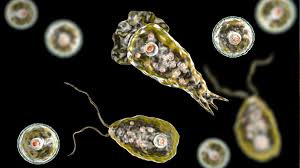
Naegleria fowleri is a single celled amoeba which is free living and thermophilic, known as brain eating amoeba. It’s one of the species of genus Naegleria which is pathogenic to humans and travels via nose to brain where it causes severe, infection term as primary amoebic meningoencephalitis (PAM)
Where is Naegleria fowleri found?
- Warm Fresh water, Lakes, Rivers
- Swimming pool (don’t have chlorine )
- Hot springs
- Soil
- Tap water
- Water heaters
- Cannot survive in saline water (Oceans)

Primary amoebic meningoencephalitis (PAM);
PAM is a rare but lethal disease caused by infection with microscopic amoeba Naegleria fowleri. It causes infection of brain (central nervous system), damages brain tissue, severe brain swelling which leads to death in most cases.
Reported cases of Naegleria fowleri in Pakistan:
As because of increase in number of cases this deadly brain-eating amoeba has attains huge media attention over the last five years. But due to lack of healthcare facilities and public awareness there are also unreported deaths in Pakistan.
According to available data first case of PAM was reported in 2008 in Karachi, followed by number of death cases reported were six in 2017, one ,in 2018 ,fifteen in 2019 while six deaths were reported in 2021 and four in 2022 (Sarfraz et al., 2023).
According to healthcare officials first case of lethal parasitic meningitis (Naegleria fowleri) reported in Lahore by the year of 2023 while this lethal parasite also claimed two more lives in Karachi per week.
Risk Factors/who gets infected?
As N. fowleri is free living and can survive in warm fresh water, soil and in the host (human central nervous system). The chances of get N.fowleri infection is linked to water recreational activities as shown in figure below.
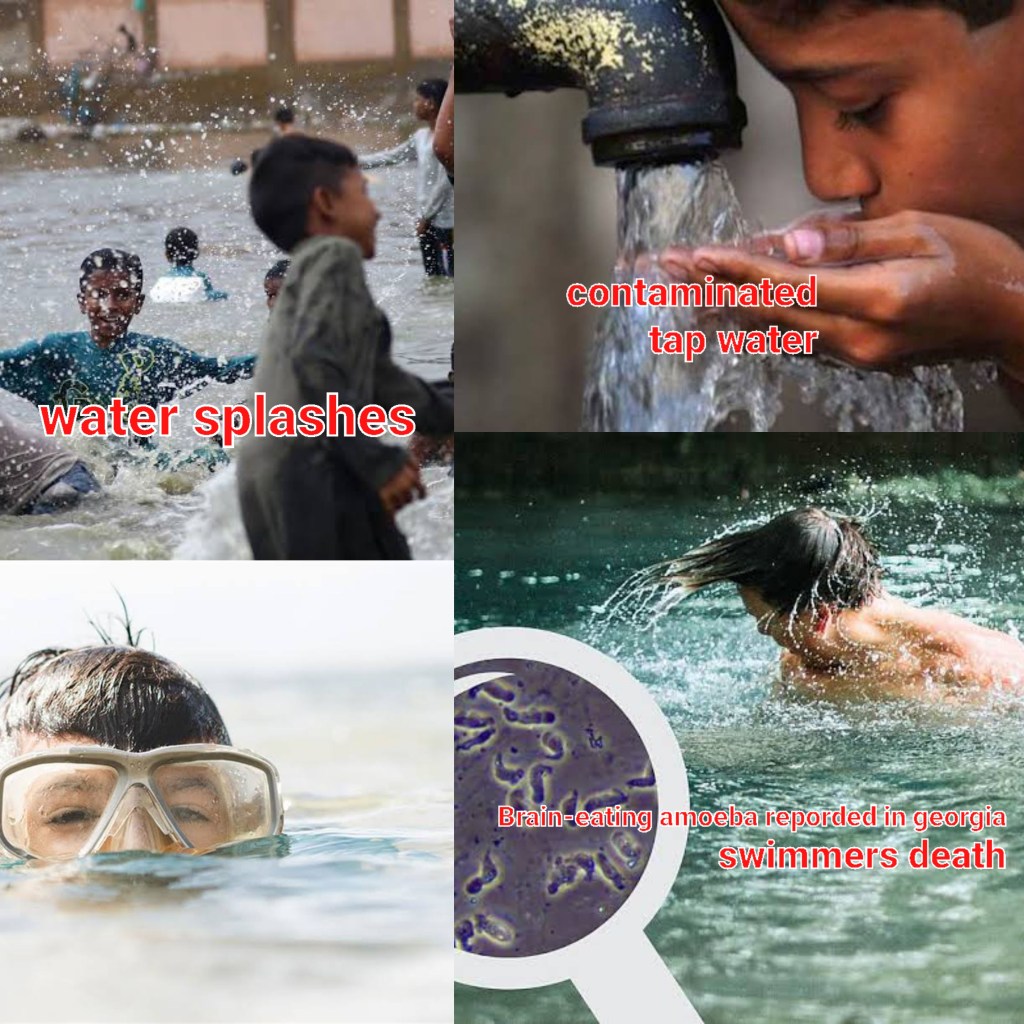
In a rare instances healthy children and adults following water activities such as Swimming, water skiing, diving (water that are not chlorinated ) or by using contaminated Tap water to rinse nose are at a risk of acquiring N.fowleri infection.
- Reported ideal average temperature range for the growth of N.fowleri is 35-39°C from April to September
How does N.fowleri cause infection?
This typically happens when people go to swimming or diving and puts down their heads under fresh water (rivers, lakes) which is non-chlorinated.
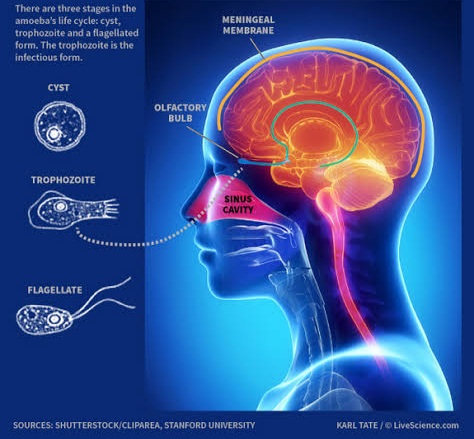
- When water splashes into nasal cavity water containing amoeba enters the host through nose
- where it first attach to nasal mucosa and then ascends via olfactory nerve(functions for the sense of smell ) to reach central nervous system where it damages the brain thus named as “Brain-eating amoeba” (Grace et al., 2015 ; Safaraz et al., 2023).
Clinical Symptoms and Diagnosis
Naegleria fowleri symptoms appears within 2 to 8 days or 24hrs of infectivity which includes
- Severe headache
- Fever, chills
- Confusion, Seizures
- Nausea, Vomiting
- Stiff Neck
- Stiff Neck
Diagnose based on the observation of clinical signs and Cerebrospinal fluid CSF ( fluid around brain and spinal cord) analysis which shows changes in color gray to red and presence of parasite via staining and MRI of brain . Heart rhythm abnormalities and increase in CSF fluid pressure have been reported. It has 98% mortality rate (death) within 3 to 7 days.
Precautions
Risk of Naegleria fowleri infection flares up whenever you are in freshwater which can be reduce by following precautionary measures
- Avoid swimming in warm freshwater during summers (Lakes, ponds, rivers and hot spring) as increase in temperature favors the growth of heat-loving N.fowleri
- When swimming don’t allow water to enter your nose, don’t jump in as it makes more likely for water splashes to go up your nose.
- Avoid using tap water when rinsing nasal passage or sinus. Use sterile or boil water
- Disinfection of swimming pools ponds and other freshwater places should be maintained
- N.fowleri cannot survive in clean cool and chlorinated water. Chlorination of pools, ponds and other recreational water is a key method to eliminate this parasite.
- By combining two disinfectant technologies UV and chlorine complete removal of N.fowleri has been reported (Arberas-Jiménez et al., 2022)
- Public awareness is necessary, Health authorities should aware public whenever there is rise in N.fowleri cases.
- Follow treatment prescribed by medical doctor.

It is important to aware public and follow allied strategy
References
Arberas-Jiménez, I., Sifaoui, I., Reyes-Batlle, M., Rizo-Liendo, A., Sancho, L., Urruticoechea, A., … & Lorenzo-Morales, J. (2022). Ultraviolet–Chlorine combined treatment efficiency to eliminate Naegleria fowleri in artificial surf lagoons. Heliyon, 8(11), e11625.
Grace, E., Asbill, S., & Virga, K. (2015). Naegleria fowleri: pathogenesis, diagnosis, and treatment options. Antimicrobial agents and chemotherapy, 59(11), 6677-6681.
Sarfraz, M. R., Tariq, H., Rehman, S., & Khan, S. (2023). Naegleria fowleri-The brain-eating amoeba: an emerging threat in Pakistan. Acta Bio Medica: Atenei Parmensis, 94(2
https://www.nation.com.pk/29-May-2023/naegleria-claims-two-more-lives-in-karachi
https://www.ncbi.nlm.nih.gov/books/NBK430754/

 Microbiology